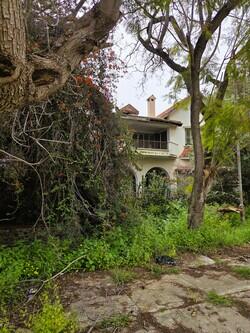
Varosha in the Famaguasta, Cyprus - The silence that still speaks. Missing people from the 1974 event.
Photo. Varosha in the Famaguasta district, Cyprus - The silence that still speaks. Symbol of many things. One reminder is where are the all missing people from the 1974 event. © Travel Explorations.
Behind the faded balconies and broken windows, life once paused mid-sentence. And even today, as the world moves on, you can sense that something remains unresolved, not just politically, but deeply human. Varosha is not only a ghost town. It is a place where history still waits for answers.
Cyprus has a long history of invasions because of its strategic position between Europe, Asia, and the Middle East. Over centuries, it was ruled by empires like the Byzantines, Venetians, and Ottomans, before coming under British control in the 19th century. Tensions grew in the 20th century between Greek Cypriots (who mostly wanted union with Greece) and Turkish Cypriots who feared being marginalized.
In 1974, a Greek-backed coup aimed to unite Cyprus with Greece. In response, Turkish invasion of Cyprus began, with Turkish forces landing on the island. Within weeks, they controlled about one-third of Cyprus. The city of Varosha was suddenly abandoned as residents fled in fear. Many left everything behind, and expected to return soon.
Around 150,000 Greek Cypriots escaped or were displaced from the north to the south, while tens of thousands of Turkish Cypriots moved north. Varosha was sealed off by the military and remains largely frozen in time—a powerful symbol of division, loss, and unresolved conflict on the island.
Many people disappeared during the events of 1974, and it is still an emotional and political issue today. Varosha was sealed off by the military and remains largely frozen in time. It became a powerful symbol of division, loss, and unresolved conflict on the island. It still is!
During and after the Turkish invasion of Cyprus, around 2,000 people from both communities. There were mostly Greek Cypriots, but also Turkish Cypriots were reported missing. Many were civilians or prisoners of war who vanished in the chaos. Some were later found in mass graves, while others are still unaccounted for.
To deal with this, the Committee on Missing Persons in Cyprus, supported by the United Nations, has worked for decades to locate, exhume, and identify remains. This work continues today, bringing answers to families - even after 50 years.
It still affects the conflict. The issue of missing persons is deeply tied to trust, justice, and reconciliation:
- Families still seek truth and closure
- It reinforces pain and mistrust between communities
- It complicates negotiations for a fully united Cyprus
The truth is difficult, but important:
Many of the people who went missing during the Turkish invasion of Cyprus were killed during the conflict and buried in unmarked or hidden graves. Over time, some of these graves have been discovered across both the northern and southern parts of Cyprus.
Today, the Committee on Missing Persons in Cyprus is still working to find them. Their teams carry out excavations, often based on old witness accounts, military records, or new evidence. When remains are found, they use DNA testing to identify the individuals and return them to their families for proper burial.
So where are they?
- Many have been found in mass graves or isolated burial sites
- Some were buried secretly in fields, wells, or military areas
- A significant number have now been identified and returned to families
- But hundreds are still missing, and their exact locations are unknown
For families, this is not just history. It is an ongoing search for truth and closure. Even after 50 years, Cyprus is still, quite literally, digging into its past to find answers. Even though progress has been made, the unresolved cases remain a symbol of the island’s division, and one of the human barriers to a lasting peace.
Some stories in Cyprus are not told loudly. You hear them in pauses, in lowered voices, in what people choose not to finish. And you understand that history here is not only something you see. It is something people still live with.
Stein Morten Lund, April 2026
Additional information
Sources used as background information for this article and that confirm:
- Around 2,000 people were reported missing after 1974¨
- Many remains have been found and identified, but not allThe issue is still ongoing and politically sensitive
- It continues to affect trust in UN-led reunification talks
Here are sources regarding missing persons in Cyprus and the 1974 events:
Key official and international sources
Committee on Missing Persons in Cyprus (CMP)
The main body working on this issue
Official site: https://www.cmp-cyprus.org
Provides data on excavations, identifications, and ongoing work
Confirms ~2,000 missing persons cases from both communities
United Nations Peacekeeping Force in Cyprus
Background on the conflict and humanitarian efforts
https://unficyp.unmissions.org
Explains the buffer zone (“Green Line”) and UN role since 1964
International Committee of the Red Cross
Early documentation of missing persons and humanitarian law
https://www.icrc.org
Reports on prisoners of war and disappeared persons
Reports & human rights documentation
European Court of Human Rights
Key legal cases on missing persons
Cyprus v. Turkey (2001)
Found Turkey responsible for failing to investigate missing Greek Cypriots
Human Rights Watch
Independent reporting on disappearances and conflict legacy
https://www.hrw.org
Background & historical context
BBC News
Clear summaries of the 1974 conflict and its consequences
Search: “Cyprus 1974 invasion BBC”
Encyclopaedia Britannica
Overview of Cyprus history and division
https://www.britannica.com







 E-mail this
 Print this