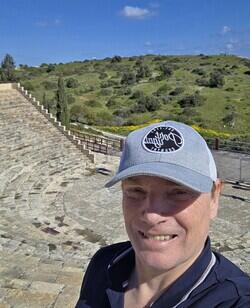
Kourion Theatre, Cyprus
Photo.
The sun painted the Mediterranean in strong colour blue when I first stepped onto the limestone tiers of the Curium, Kourion Ancient Theatre, in Cyprus. I have visited plenty of ruins that seems like a museum. They feels cold, roped-off, and silent. But Kourion is different. It’s alive. Surrounded by a rugged colourful landscape it strengthen my experience even more.
Standing there, I didn't just think about the history and dramatic entertainment, but also feel the vibrations of two thousand years of applause. In this Greco-Roman theater gladiators fought for their life. The site is nestled on a 100 meter hill right next to the sea and offers breathing view of the coast of Episkopi Bay. What makes Kourion special is that it refuses to stay in the past. It was originally built in the 2nd century BC, shaken by earthquakes, and rebuilt by Romans who loved their spectacles. Today, it still hosts concerts, Shakespearean plays and Greek tragedies under the stars.
The wind carried something with it. Not just the scent of the sea rising from Episkopi Bay far below, but something older, and echoes that seemed to move through the stone itself. I stood there, looking out across the rugged cliffs and the shifting colours of the landscape, and suddenly it didn’t feel like I was alone.
Two thousand years of applause lingered in the air. Here, on this hill above the sea, stories were never just told—they were lived. Gladiators once fought for survival, actors performed tragedies under the open sky, and crowds gathered, their voices rising and falling like the waves below. The theatre has been broken, shaken by earthquakes, and rebuilt by hands that believed in spectacle, in drama, in the power of gathering together.
And somehow, it never stopped. Today, as the sun begins to soften and the shadows stretch across the ancient stone, the stage still waits. Shakespeare is spoken here. Music drifts into the night. The past does not sit quietly—it performs. Standing there, I realised something simple but powerful: Some places don’t belong to history. They belong to the moment you arrive.
Stein Morten Lund, April 2026







 E-mail this
 Print this